.png)


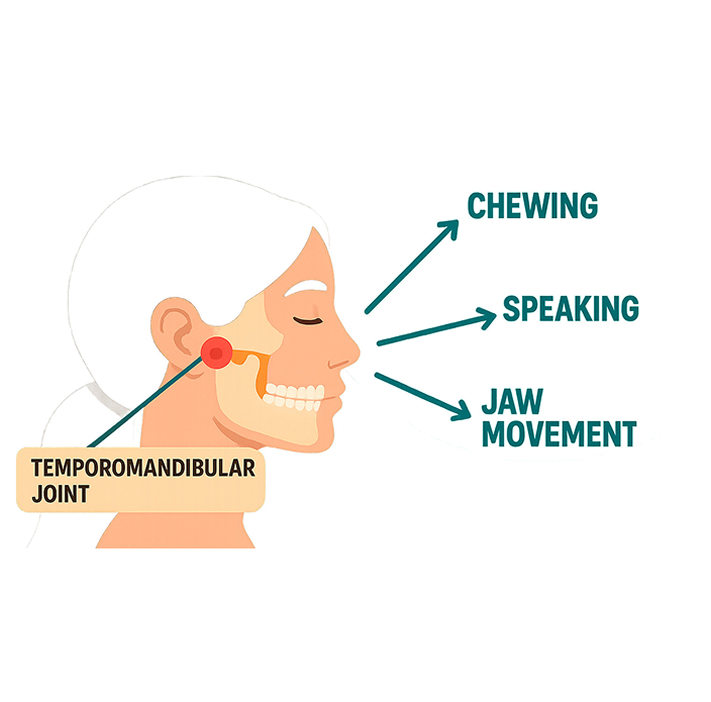
Most people think of jaw pain as a local problem — something in the temporomandibular joint that needs fixing, whether with a splint, surgery, Botox, or PT. But the science — and our lived experience — tells us a vastly different story.
What you feel around your jaw, face, hyoid bone, throat, and neck is not just local pain. It is a systemic expression of how your nervous system has been living in the world.
Your connective tissue, muscles, fascia, and reflexive guarding patterns are mapping life experience into physical form. This is why symptoms often appear in the jaw and the neck, the hyoid region, the tongue, and the entire posture…
…and why approaches that only treat one piece often fail or are simply incomplete.
This is the territory of somatic medicine.
The Anatomy of Expression: Why Jaw and Neck Tension Aren’t “Isolated”
The jaw joint (TMJ) is a complex synovial articulation that depends on coordinated movement of muscles and fascia to function without pain.
Pain and dysfunction here often involve muscles and connective tissue beyond the joint itself — including the neck and the muscles above and below the hyoid bone. Physiopedia
The suprahyoid muscles — the digastric, mylohyoid, geniohyoid, and stylohyoid — connect the mandible, hyoid bone, and skull. They are essential for chewing, swallowing, phonation, and airway stability and contribute to mandible depression and jaw opening. NCBI+1
These muscles don’t work in isolation. They connect to:
- Nervous system pathways (motor + sensory nerves governing expression and protection)
- Fascial networks that link head, neck, and torso
- Postural tension patterns that show up as bracing, collapsing, or guarding
This is why jaw symptoms often correlate with neck tension, breathing mechanics, and posture. Research shows relationships between TMJ dysfunction and craniocervical posture, meaning jaw and neck function influence one another.
Fascia and the Nervous System: A Unified Regulatory Network
Fascia — the connective tissue that wraps muscles and organs — is not inert packing material. It’s a regulatory system that feels, transmits, and stores information, both biomechanically and neurologically. Modern research highlights that fascia is intimately linked to the nervous system and may participate in whole‑body health communication, not just isolated muscle movement.
This science supports what somatic traditions have always known: tension and protection patterns in fascia reflect lived experience, nervous system tone, and relational imprinting.
Myofascial and Functional Therapies: Evidence for Integrated Approaches
Studies in temporomandibular dysfunction (TMD) show that interventions targeting myofascial structures beyond the joint — including release, stretching, and functional retraining — can reduce pain, improve range of motion, and enhance jaw coordination.
One clinical trial found that myofascial release therapy was effective in reducing TMD symptoms and improving jaw mobility and muscle tone more than exercise alone.
Another study specifically explored suprahyoid release in people with TMD and found significant improvements in jaw function and swallowing outcomes after targeted work on those muscles.
These findings confirm that:
- Jaw dysfunction is rarely just jaw dysfunction
- Fascial and muscle tension systems matter
- Integrated approaches produce measurable changes
Training Function, Not Just Unwinding
Unwinding tension is a start — but it is not enough.
There’s a big difference between:
- “Relaxing a muscle”
- And training function in the context of your nervous system, fascia, and biomechanical patterns.
Suprahyoid muscles can be strengthened and trained in purpose‑specific ways. Research shows that jaw‑opening exercises targeting suprahyoid muscles can:
- Increase hyoid elevation
- Improve swallowing mechanics
- Enhance functional muscle engagement
…without being invasive.
This is critical: function is not just freedom from pain. Function is coordinated, safe, energetic expression — an ability to move, speak, breathe, chew, and embody presence without bracing.
Why the Hyoid and Neck Matter for Expression, Not Just Mechanics
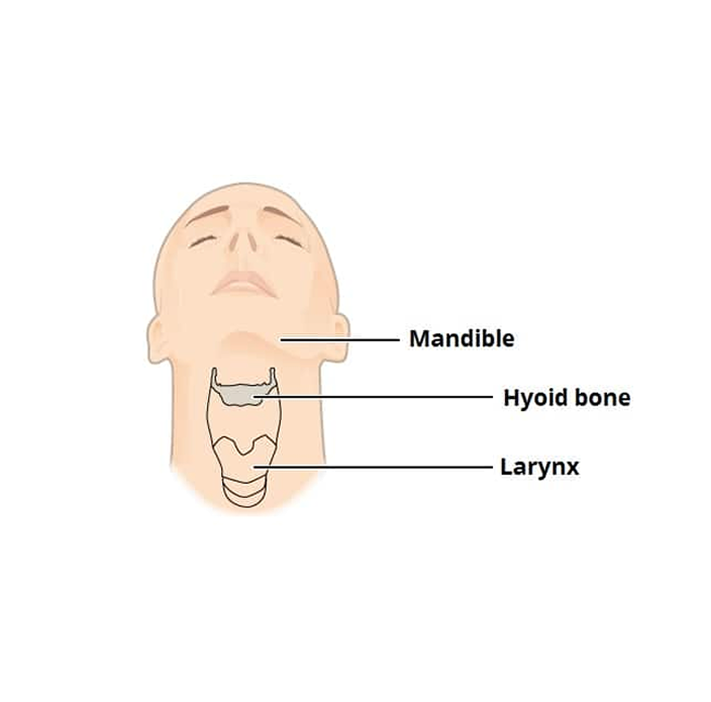
The hyoid bone is unique — a floating bone suspended by muscles rather than articulating with other bones. It supports the tongue, airway, and voice mechanisms. The thyroid cartilage sits just below, forming the structure of the voice box. Both are integral to self‑expression and breathing mechanics.
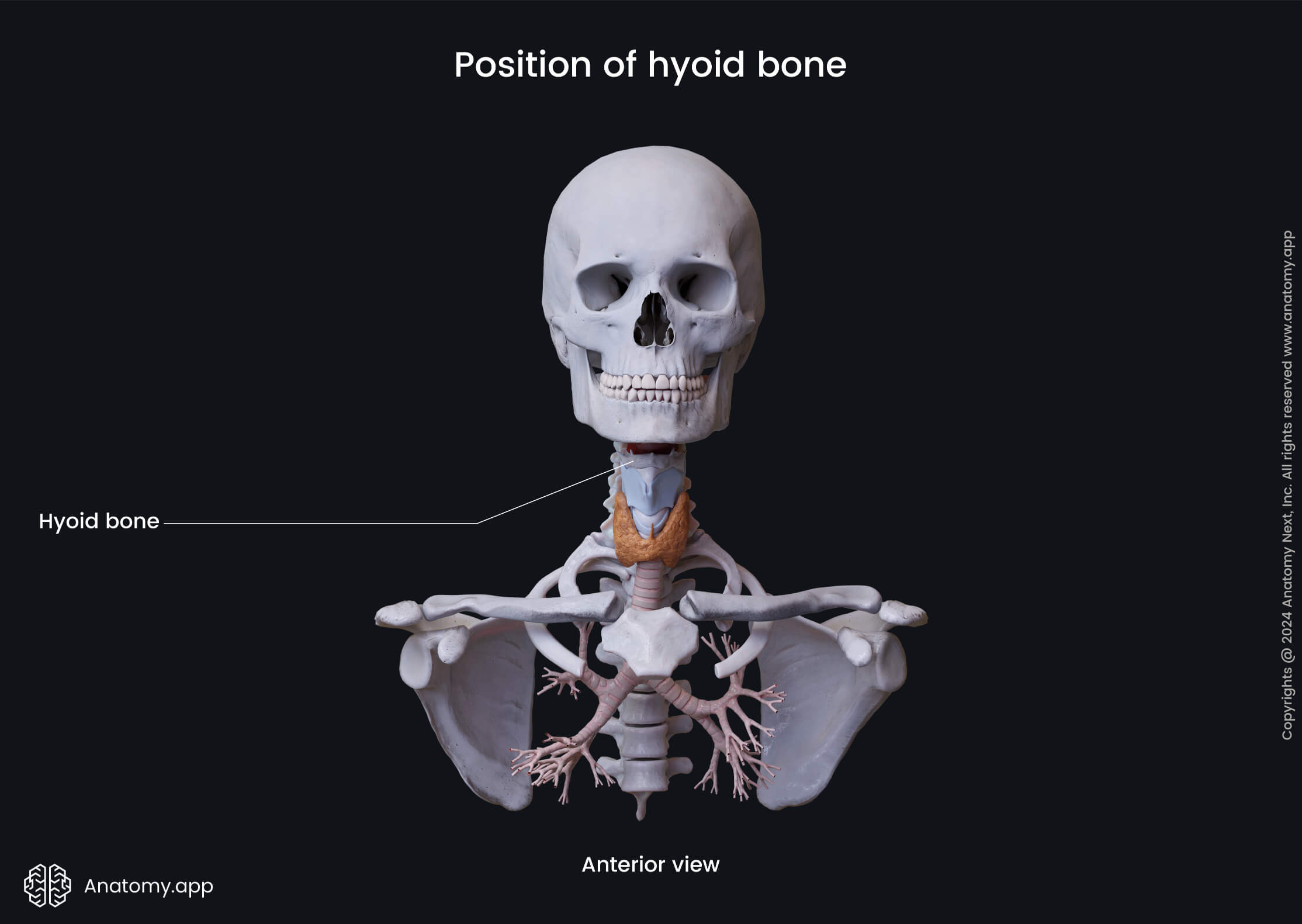
This anatomical and functional reality explains why:
- Tension in this area often feels emotional
- Speaking, breathing, and swallowing can feel guarded
- Body tension reflects patterns of suppression, protection, and learned self‑silencing
And — critically — this is not “psychological only.” It is somato‑nervous, real, measurable, and trainable through mindful, functional movement and fascial engagement.
Somatic Patterns: Why Bracing Isn’t “Just Muscle Tightness”
Bracing — the body’s reflexive pattern of contraction in response to perceived threat — is a nervous system default, not a structural fluke. In hypermobile or neurocomplex bodies, these patterns are heightened, because the system is more responsive and adaptive.
This pattern shows up as:
- Chronic tension
- Guarded posture
- Protectiveness in the jaw, neck, and hyoid region
- Difficulty letting the body register safety
This is why therapies that leave out nervous system regulation, breath, and subtle alignment often fall short.
A Full Body System Integration. Self‑Assisted, Non‑Invasive, Nervous‑System‑Informed
This is where your body and your awareness meet.
You don’t need others to fix your hyoid, your jaw, or your neck. What you need is:
- Awareness of your body’s responses
- Functional training that retrains muscles and nervous system patterns
- Safe, non‑invasive methods that honor fascia, posture, and energy flow
That’s exactly what the Holistic TMJ Course is designed to do — and it’s why TMJ doctors endorse it because it is specifically designed to target complex muscle group mechanics safely within functional range and nervous system‑friendly parameters.
This isn’t just stretching or unwinding.
This is a TMJ safe somatic retraining that builds function, expression, and liberation.
Because function is not just a pain‑free jaw.
Function is your permission to embody presence, expression, and energy without bracing.
Key Research Backing What We Practice
Here are the peer‑reviewed studies that support the principles above:
- Suprahyoid muscle anatomy and functional role — details its role in chewing, swallowing, and jaw mechanics. NCBI
- Myofascial release efficacy in TMD — shows that fascial‑focused therapies significantly improve symptom relief and mobility. PMC
- Suprahyoid release improves jaw function — demonstrates improved swallowing and jaw range of motion post‑intervention. Semantic Scholar
- Interventions improving jaw function and pain — physical therapy and integrated approaches improve mandibular coordination, especially with hypermobility. MDPI
- Fascia as a nervous system regulatory continuum — supports the idea that connective tissue is dynamically linked to nervous system regulation. Frontiers
In Summary: Liberation Is Not “Soft.” It’s Functional and Embodied
Pain is not the enemy.
Pain is language.
It tells you where your system is trying to protect you.
But protection becomes life - limitation and frozen patterns when it outlives the threat.
Your body can unwind — but more importantly, it can learn new patterns of function, safety, and expressive ease.
And that is liberation (Embodied Freedom).